
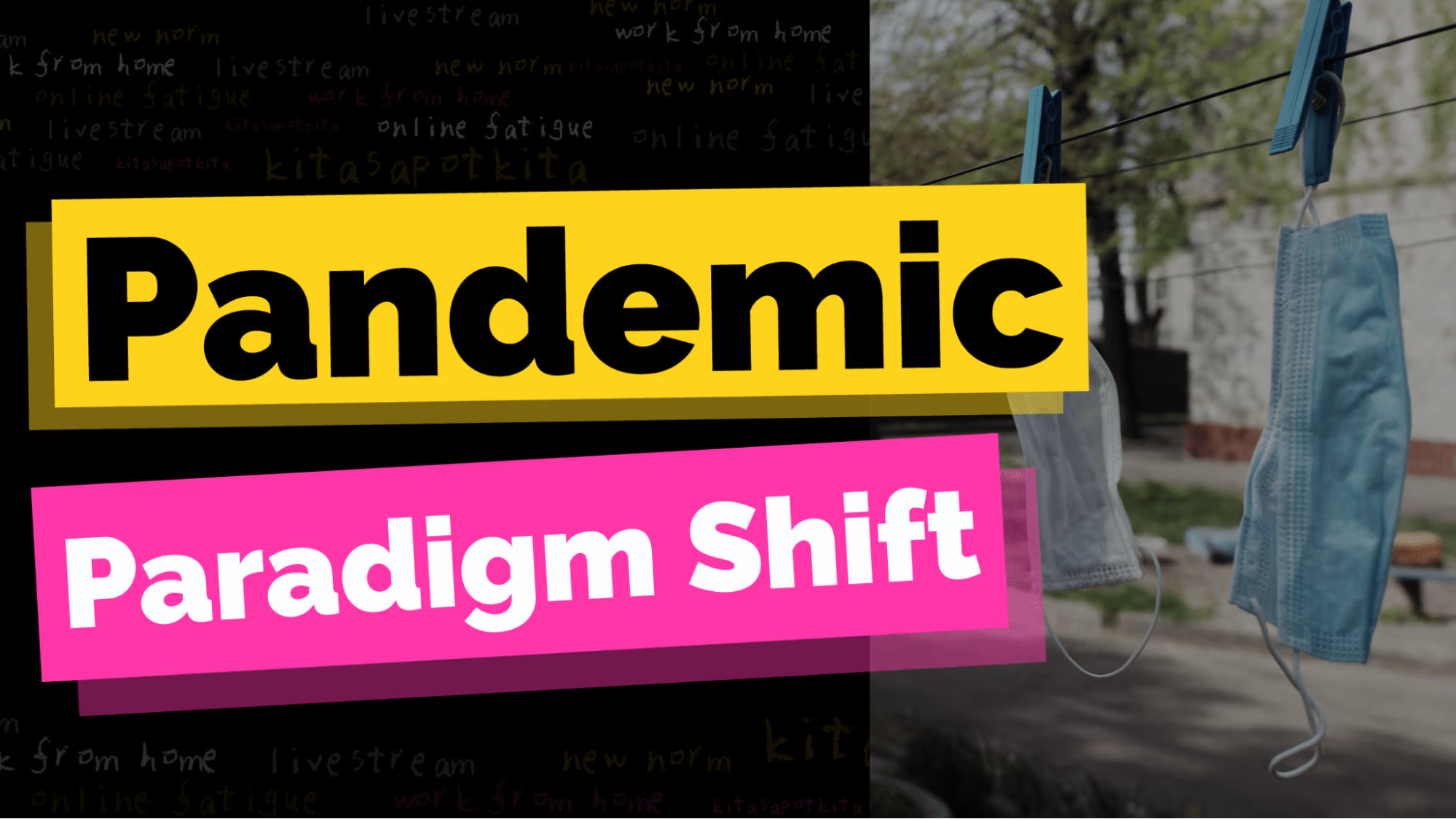
COVID-19 changed how people work, shop, relax and spend time online. In this e-book, SushiVid looks at the lifestyle shifts we saw during the pandemic, the problem of online fatigue, and the new social media features, live streaming and campaign ideas brands can use to stay relevant. It was written in 2021, as vaccines were rolling out.
“Uncertainty is the only certainty there is, and knowing how to live with insecurity is the only security.” John Allen Paulos
Foreword: light at the end of the tunnel
Since its onslaught from December 2019, we have finally found hope to co-exist with and overcome COVID-19, with vaccines now available globally. Some optimists even believe we will be able to go mask-free and roam freely again.
During the peak of the pandemic, almost the entire world was in lockdown, under a movement control order or a circuit breaker. It sent waves of panic around the world. Remember the panic buying of toilet paper and the stocking up of food? Businesses worried about survival. People lost their jobs, and those still employed were forced to work from home. Children stopped going to school and had online classes instead. The world changed.
Over the centuries we have learnt that people are resilient and adapt quickly to survive and thrive. We observed, discussed and talked with business leaders, entrepreneurs and media friends over coffee about life and work during the pandemic. Here is what we found.
Work from home is here to stay
Work from home will stay even after COVID-19. The future of work will likely be a hybrid of office and remote working. Some companies will adopt a minimum-office policy, and more radical businesses a zero-office policy. Many are rethinking their office presence and redesigning offices with more flexible working areas, such as open-office layouts and more teleconferencing facilities. Cost-savvy startups have already given up their leases to go 100% remote.
With people staying indoors much more for school, work and leisure, homes must now offer a better place to work or study and a comfortable living space for families, especially where both husband and wife work from home. Flexible spaces designed for multiple uses are set to stay after the pandemic.
For businesses: companies selling desks, office chairs and office equipment such as printers, ink cartridges and paper should consider e-commerce platforms to sell online and take advantage of this boom.
A new lifestyle
Being more health conscious
People began to realise the importance of health during the pandemic. There is growing interest in jogging, hiking, walking and exercising in the park. A healthy body, a well-balanced diet, vitamins, drinking more water and good sleeping habits are believed to help people recover even if they contract the virus.
Revival of domestic hobbies
Cooking, gardening and baking were revived as hobbies during the lockdown. Some people turned these hobbies into businesses, such as artisan bakeries and home-baked cookies. Many found these hobbies therapeutic, easing the stress of work and of being confined. As work from home is not going away, there will be constant demand for home and kitchen appliances for these hobbies.
Knock-on effects
Sales of electrical and home appliances grew strongly, including laptops, headphones, juicers, grinders, ovens, air purifiers and robot cleaners. This growth was expected to continue in 2021 as some countries were still in lockdown.
The increase in online activities
Online entertainment
With lockdowns and limits on outdoor gatherings, online activity surged and demand for online entertainment soared. The Malay Mail reported that during the first lockdown, video-streaming platforms such as Netflix and Tonton saw the highest traffic growth among their rivals. Advertisers, perhaps these are the platforms to run your promos on.
Online shopping
According to an online report, Shopee and Lazada were the most popular online shopping platforms in Malaysia and Singapore during the first lockdown. Consumers shopped online for their necessities. Grocery delivery apps also grew, such as Jaya Grocer Delivery, airasia fresh, airasia food and Happy Fresh. With this trend continuing, will Malaysia finally adopt the “new retail” concept?
Booming delivery services
Our reliance on Grab and Foodpanda grew exponentially during the pandemic. Food delivery, once seen as an odd job, has become a mainstream job. This growth is expected to last beyond the pandemic, and more food delivery apps, such as EASI MY and airasia food, have appeared to meet demand.
Online dating
Online dating also became more popular. To overcome loneliness, many turned to finding soulmates and friends online. Some sites and apps offer matchmaking based on users’ profiles. It may not always lead to a walk down the aisle, but it provides comfort and company for lonely people.
E-learning: our second chance
It is not all doom and gloom. Many who missed earlier chances used the lockdown to study or learn new skills at home. With online university courses, countless language and music apps, and tutorials on YouTube and Pinterest, people are upskilling, taking up new hobbies and returning to old passions.
The adoption of AI and automation
We are living in the age of artificial intelligence, and reliance on automation and technology is speeding up. Retail, airlines, healthcare, transport, delivery and offices have had to adapt to stay in the game.
- Robots and automation are replacing administrative and data-entry roles, and even some accountants and auditors. Demand for data scientists, digital and strategy specialists and process automation specialists has increased.
- E-commerce and the “delivery economy” will likely keep growing, while some jobs in travel, hospitality and retail shops may become redundant. There will be more jobs in distribution, warehousing, transport and delivery centres.
- Digital interactions and transactions have risen sharply. Medical care and education, which both depend on close contact, adopted digital tools significantly. Telemedicine spiked, and teacher-student interaction moved to laptops.
The future of travel
Holidaymakers will keep taking more domestic trips even when borders reopen. In countries like Sweden, demand for boats and campervans has soared. Many people stay in their summer houses, take long road trips and travel domestically by boat.
Travelling by car has become very popular. It is one of the safest ways to travel during the pandemic, it is flexible, and it is much more affordable than flying.
Work while you play
With leisure trips cancelled in 2020 and 2021, many people will take longer trips to make up for lost time. With remote work, many may choose “flexcations”, where they work and holiday at the same time. We believe holiday destinations and accommodation providers will benefit and see business pick up.
What is online fatigue?
With the rise in online activities, many people have started to experience online fatigue: feeling worn out and trapped by the need to be online all the time. It is common among students and working adults. According to the Malaysian Mental Health Association, from March to December 2020 it provided 3,000 hours of counselling and psychological support to hundreds of students, office workers, young executives and health workers. All the cases were linked to psychological distress caused by the pandemic.
So what can we do? Even when everyone is vaccinated, we will still need time to recover. Life goes on, businesses need to operate to keep the economy running, and the internet is often the only way to make things happen. If you hesitate about going online while others survive and thrive there, you lose precious time. It is time to get creative with what you can do online to give your business a boost.
Creativity beats online fatigue: new social media features to use
Social media platforms keep adding new features, and they are introduced for a reason. Think out of the box, focus on these features and engage your audience in a new way. Here is a recap of the features we recommend and how you can use them.
TikTok
A highly addictive platform for entertaining content. If your content is good, your video has a real chance to go viral with high views and reach. Keep in mind that TikTok content is mainly for entertainment, not for pushing a sales campaign.
Instagram Reels
A feature similar to TikTok. It may not have as many effects, but it is a new space that is not yet flooded with branded content. Brands can use this advantage and be pioneers in creating branded content on Reels.
Instagram Guides
A new way to create content. It works like a photo album and lets users follow a curated flow of posts with commentary. It is especially good for step-by-step guides, tips and recommendations.
Instagram stickers
Adding stickers to Instagram campaigns makes posts and Stories more relatable, expressive and less boring. Stickers are inexpensive to create and have no expiry date. Submission to Facebook is also free, so consider them a value-added touch for your campaign.
Augmented reality (AR) filters
An interactive way to engage your audience, and a lot more affordable than you might think. AR filters give your users a unique brand experience: anyone who uses your filter connects with your brand. You can see the filters SushiVid has built for clients on SushiVid’s Instagram (@sushi.vid).
IGLinks.io
A platform that lets you white-label up to 300 mini web pages in one go. It creates a seamless flow for your audience from Instagram to your website, helps you track campaigns better and gives strong brand visibility across your influencer campaigns. More information is at www.iglinks.io.
Live streaming is hot
Live streaming is in rising demand. You have probably seen live streams for awareness campaigns, promotions, product reviews, product sales, live performances and even virtual tours. With demand growing, the market lacks good live streamers. No offence, but this is a fact.
Based on our experience, a successful live stream depends on these key factors:
- Are you well prepared, and did you practise enough?
- Do you know your products well?
- Are you articulate?
- Did you promote your live stream session well?
- Do you have the right equipment in place?
Use Facebook as your selling platform
Many people now sell through Facebook and Instagram Shops. Adding an online shop to your Facebook and Instagram pages is a smart move: you can run promotions and awareness campaigns and sell products on the same platform.
You can also use Facebook Live to offer flash sales with great discounts. To make Facebook Live work, the offer must be real-time. Your audience has to watch live to get it, and it will not be available after the session ends. It is a take-it-or-leave-it decision. If this seems complicated, training can be provided.
Clubhouse vs podcasts: which is better?
Clubhouse was a hit when it launched. The audio social app was popular because many key opinion leaders used it. It felt like a mix of TED Talks and podcasts, with discussions on topics such as entrepreneurship, books, current issues and health. Listeners can “raise their hand” to speak.
However, it is invite-only: you need to know an existing user and be invited in before you can join any live session. There are no recordings, so it is a listen-or-leave experience. Honestly, it is not very user-friendly, and for those who just want to listen quietly, it can be too noisy.
Podcasts seem a better option in the long run. You can listen when it suits you, even on the go, and catch up on news and events without worrying about timing.
Future campaigns outlook
More home parties instead of outdoor celebrations
With the pandemic ongoing, responsible people will avoid crowded outdoor areas, even if they secretly wish to go. Businesses that depend on outdoor celebrations need to think out of the box and repackage their offerings. How about home party packages? Birthday, anniversary and even wedding packages, distributed online. Not enough manpower to deliver? Third-party riders and drivers such as Grab and Lalamove are happy to help.
Employee advocacy programmes
SushiVid is an influencer marketing company: we recommend influencers to clients, liaise with them and manage campaigns. Even so, we often suggest an employee advocacy programme to our clients. Instead of only hiring influencers, why not train your employees to be your in-house influencers? No one understands your products better than your employees. If they become active on social media and eventually run online campaigns for you, it can bring good results for your business. SushiVid has the tools and software to help set up such a programme.
CSR projects: good timing
Mental health is a serious issue during the pandemic. Brands could find ways to support students, employees and frontline workers. Media drops are one idea, and they do not have to be food. A small gesture, such as a greeting card with encouraging messages, lets people know they are not alone and that someone understands and can support them. Other ideas worth exploring include motivational videos, non-sales email marketing and funny clips on social media.
Keep going, together
There is still a long way to go before we reach victory. Businesses need to stand tall and keep operating, explore new paths and find what works. Do not let the current situation bring you down. Stay safe and keep following the SOPs. #kitasapotkita
If you want to brainstorm campaign ideas, from live streaming and AR filters to employee advocacy, talk to SushiVid about our managed influencer marketing service, or see what has worked for other brands in our case studies.
Download the e-book (PDF)
29-page PDF, free, no sign-up.
Frequently asked questions
How did the pandemic change digital marketing?
People moved much of their work, shopping, entertainment and learning online. Brands saw growth in e-commerce, delivery apps, streaming platforms and live streaming, and needed new, creative formats to beat online fatigue.
What is online fatigue?
Online fatigue is feeling worn out and trapped by the need to be online all the time. The e-book suggests brands fight it with creativity, using new social media features to engage audiences in fresh ways.
What makes a live stream successful?
Good preparation and practice, strong product knowledge, clear speaking, promoting the session well and having the right equipment.
What is an employee advocacy programme?
It trains a company’s own employees to act as in-house influencers on social media. Employees know the products best, so they can promote them credibly and even help run online campaigns.